
Consequential Damage Warranty Denied? What Your Contract Actually Says
"My water pump failed and destroyed my engine. Why won't they cover it?"
This question—or some version of it—appears in consumer complaint forums, attorney general offices, and courtrooms across the country. A covered part fails, causes damage to other parts, and suddenly the warranty company is pointing to exclusions the customer never knew existed.
The term for this is consequential damage (sometimes called sequential damage)—when one component's failure causes another component to fail. It sounds straightforward, but it's become one of the most disputed areas in vehicle service contracts, to the point that it was clogging state court dockets and forcing regulatory action.
Here's the honest truth: most consequential damage warranty denials are legitimate. But the reasons might not be what you think. Understanding how your contract actually handles chain-reaction failures—and what your responsibilities are when something goes wrong—can mean the difference between an approved claim and a denial.

What Is Consequential Damage Warranty Failure?
Consequential damage occurs when one part's failure causes damage to other parts. The concept is simple; the complications arise in how contracts define it—or don't.
Common examples:
- Water pump fails → engine overheats → head gasket warps
- Timing belt breaks → pistons hit valves → engine destroyed
- Transmission seal leaks → fluid runs low → transmission burns out
- Bolt fails → component it was holding breaks loose → damages surrounding parts
In each case, there's an initial failure and then secondary damage caused by that failure. The question becomes: what's covered?
The answer depends entirely on your specific contract—and many contracts either exclude consequential damage entirely, define it vaguely, or leave enough ambiguity to deny claims in gray areas.
Why Courts Got Involved (And What Changed)
Consequential damage warranty disputes became such a widespread problem that they were clogging state court dockets. Customers would sign contracts, experience chain-reaction failures, get denied, and sue. Judges faced inconsistent contract language and no clear standards.
The response came through the NAIC Service Contracts Model Act and subsequent state legislation. Multiple states now require contracts to clearly disclose their consequential damage policy.
For example, Washington State law (RCW 48.110.075) requires that service contracts state "whether or not the service contract provides for or excludes consequential damages or preexisting conditions."
Similar requirements exist in Maine, Texas, Minnesota, Missouri, and other states that follow the NAIC model.
But here's what most consumers miss: The requirement is disclosure, not coverage.
A contract that says "we exclude consequential damage in our warranty" is fully compliant with these regulations. The burden shifted to you—the consumer—to read the fine print before you sign. When you do sign, you've acknowledged the limitation. Case dismissed.
The Section of Your Contract You Probably Skipped
Every vehicle service contract contains a section explaining what to do when a failure occurs. It's usually titled something like "How to Make a Claim" or "Your Responsibilities." Most customers skip it entirely—until they have a claim denied.
The standard language looks something like this:
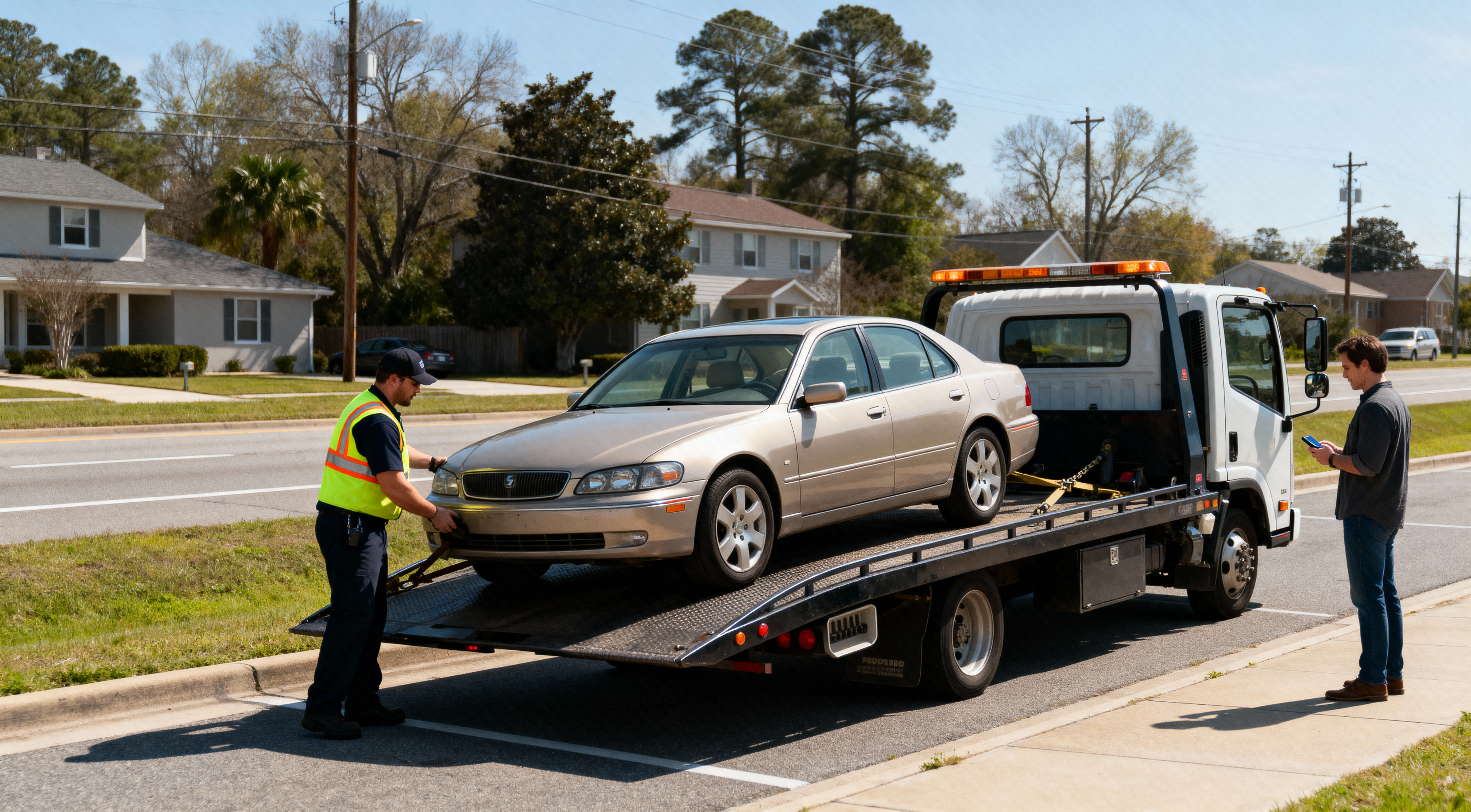
"If the vehicle becomes inoperable, immediately stop the vehicle and call for towing. It is your responsibility to use all reasonable means and precautions to protect the vehicle from further damage. Continued operation of the vehicle after any mechanical breakdown shall void coverage for any resulting damage."
This language appears in virtually every contract because it directly ties to the exclusions section. When you keep driving after a warning sign appears, you're not just risking more damage—you're potentially voiding your coverage for everything that follows.
The California Department of Insurance explains it plainly: "Continuing to drive a car with [a problem]...always result in a repair claim being denied based on several exclusions, e.g. driving your car without proper fluid; negligence or abuse; and/or overheating."
Why Most Consequential Damage Warranty Claims Get Denied
Here's the scenario warranty companies see constantly:
- Water pump starts failing
- Temperature gauge rises / warning light appears
- Driver thinks: "I'm almost home, I'll deal with it later"
- Driver keeps going
- Engine overheats severely
- Driver STILL keeps going
- Engine is destroyed
- Driver files claim: "My water pump failed and caused my engine to blow"
The claim is denied. And it should be.
This isn't consequential damage from a sudden, unavoidable chain reaction. This is damage from continued operation after warning signs appeared. The water pump failure was the opportunity to stop. Everything after that was the driver's choice.
Every contract excludes damage from continued operation—and for good reason. If it didn't, customers could drive on warning lights indefinitely and expect the warranty to cover whatever eventually fails.
The Seal and Gasket Trap
One of the most common paths to denied consequential damage warranty claims starts with something small: a seal or gasket leak.
Many contracts don't cover seals and gaskets, or only cover them under limited circumstances. So when a seal starts leaking, the customer ignores it—after all, it's "not covered anyway."
Here's what happens next:
- Seal leaks slowly
- Customer ignores it (not covered, why bother?)
- Fluid level drops over weeks or months
- Engine or transmission runs low on fluid
- Major component fails
- Customer files claim for engine or transmission
- Investigation finds evidence of chronic leak
- Claim denied: damage resulted from low fluid / improper maintenance
The lesson: Even if seals aren't covered, you cannot ignore leaks. A $50 seal repair (out of pocket) protects a $5,000 engine (covered). Letting a leak go because "it's not covered anyway" will void coverage on the major components that ARE covered.
For more on protecting yourself from pre-existing condition denials related to leaks and seepage, see our guide: Pre-Existing Condition Warranty: 5 Proven Defenses.
The Fastener Loophole
Here's where consequential damage warranty language gets weaponized by some extended warranty providers.
Every vehicle service contract excludes bolts, fasteners, clips, and hardware from the covered parts list. That's reasonable—these are consumable items replaced as part of any repair. When your transmission is fixed, the bolts are included as part of the covered repair.
But some providers flip this logic to deny claims:
The Chicken-and-Egg Denial
Scenario: Exhaust manifold fails (covered part).
Investigation finding: The retaining bolts/fasteners failed first, causing the manifold to break.
Denial reason: "Fasteners are not listed for coverage. The manifold damage is consequential damage resulting from a non-covered part."
The problem: What component of any vehicle could NOT be denied using this logic? Every part is held in place by bolts, fasteners, clips, or brackets. If a provider wants to deny a claim, they can almost always trace the failure chain back to something not explicitly listed—and call everything else "consequential."
This is the Pandora's Box that vague consequential damage language opens. It becomes an escape hatch for providers looking to deny claims that should be covered.
What to look for in a contract: Does the contract clearly state that covered parts remain covered regardless of what initiated the failure chain? Or does it leave room for the fastener loophole?
When Consequential Damage IS Covered
True consequential damage warranty coverage applies to genuine chain-reaction failures where there was no opportunity to prevent the secondary damage.
Example: You're driving normally. With no warning, an internal transmission component fractures. Within seconds—before you could possibly react—the broken piece damages other internal components. The transmission is destroyed.
In this scenario:
- There was no warning sign to respond to
- There was no opportunity for "continued operation"
- The chain reaction was instantaneous and unavoidable
A good contract covers this. The initial failure and all resulting damage are part of the same claim.
The key difference is opportunity to mitigate. If you had warning and kept driving, that's on you. If the failure was sudden and catastrophic with no chance to respond, that's what coverage is for.
How Different Contracts Handle Consequential Damage Warranty Failures
Not all contracts are created equal. Here's how consequential damage warranty handling varies:
| Scenario | Weak Contract | Average Contract | Strong Contract |
|---|---|---|---|
| Covered part fails | ✅ Covered | ✅ Covered | ✅ Covered |
| Covered part → damages non-covered part | ❌ Only covered part paid | ⚠️ Case-by-case | ✅ Both parts covered |
| Non-covered part → damages covered part | ❌ Nothing covered | ❌ Denied entirely | ✅ Covered part still honored |
| Fastener fails → covered part damaged | ❌ "Consequential damage" | ❌ Loophole denial | ✅ Covered part honored |
| Continued operation after warning | ❌ Denied | ❌ Denied | ❌ Denied (no contract covers this) |
Key insight: The "Strong Contract" column still shows a denial for continued operation. No legitimate contract covers damage you caused by ignoring warning signs. The difference is how the contract handles genuine chain reactions where you did everything right.
How to Protect Yourself
Before You Buy Coverage
- Read the consequential damage warranty clause—Does the contract clearly state its policy? Vague language is a red flag.
- Ask directly: "If a covered part fails and damages a non-covered part, what happens?" Get it in writing.
- Check the exclusions for "continued operation"—This is standard, but understand exactly what triggers it.
- Look for fastener loophole language—Can they trace any failure back to an excluded part?
- Review what's actually covered—Know exactly which components are included before you need to file a claim.
When Something Goes Wrong
- STOP IMMEDIATELY when warning signs appear—Every mile you drive after a warning light is ammunition for denial.
- Use your roadside assistance—It's included for a reason. A tow is cheaper than a denied claim.
- Document everything: "Warning light appeared at [time/location]. Immediately pulled over. Called for tow at [time]."
- Don't try to "make it home"—That decision has voided more claims than any other.
- Follow the proper claims process—Call the claims line before authorizing any repairs.
Ongoing Protection
- Don't ignore leaks—Even if seals aren't covered, letting a leak go will void coverage on major components.
- Follow maintenance schedules—Lack of maintenance is an exclusion in every contract.
- Keep records—Documentation protects you if your response is ever questioned.
For comprehensive guidance on documentation and protecting yourself from claim denials, see: Extended Warranty Denied? 7 Hidden Reasons & How to Win.
Before You Buy: Know What You’re Getting
Whether you're shopping for warranty coverage or a used vehicle, doing your homework upfront prevents problems later.
If you're purchasing a used car, run a vehicle history report before buying. Hidden damage, salvage titles, or auction history can affect not only the vehicle's reliability but also your warranty coverage options. Many providers have restrictions on vehicles with certain history issues—know what you're buying before you commit.
The Bottom Line
Consequential damage is complicated—but your responsibilities aren't.
The contract is a partnership. The warranty company agrees to cover mechanical failures. You agree to:
- Respond appropriately when problems arise
- Not make things worse by continued operation
- Maintain the vehicle properly
- Use roadside assistance when needed
When both parties do their part, claims get paid. When customers ignore warning signs, drive on failing components, and then blame the warranty company for the resulting damage—that's not a coverage failure. That's a failure to read the contract.
The best protection is simple: stop when something's wrong, get it towed, and let the warranty do its job. That $100 tow protects a $5,000 engine AND your coverage.
Do the right thing, and you'll be covered.
Coverage That Works the Way It Should
VIP Warranty for Life covers your covered parts—period. We don't play the fastener game or look for loopholes to deny legitimate claims. Simple monthly payments, cancel anytime, vehicles up to 250,000 miles accepted.
Frequently Asked Questions
What is consequential damage in an extended warranty?
Consequential damage (sometimes called sequential damage) occurs when one part's failure causes damage to other parts. For example, a water pump failure that leads to engine overheating and head gasket damage. How this is handled varies significantly between contracts—some cover the chain reaction, some exclude it entirely, and some leave it vague enough to decide case-by-case. Understanding the difference between a warranty vs. vehicle service contract can also help clarify what you're buying.
Why do states require contracts to disclose consequential damage warranties?
Consequential damage disputes were clogging state court dockets with lawsuits from customers who didn't understand their coverage. The NAIC Model Act and state laws now require contracts to clearly state whether consequential damage is covered or excluded. However, this only requires disclosure—not coverage. A contract that excludes consequential damage is fully compliant as long as it tells you upfront.
What is the “continued operation” exclusion?
Nearly every vehicle service contract excludes damage that results from continuing to drive after a warning sign appears. If your temperature gauge rises and you keep driving until the engine is destroyed, the continued operation—not the original failure—caused the major damage. This exclusion exists in virtually all contracts and is the most common reason consequential damage claims are denied.
Can a warranty deny my claim because a bolt or fastener failed first?
Some contracts use vague consequential damage language to deny claims by tracing failures back to excluded parts like bolts and fasteners. Since every component is held in place by fasteners, this creates a potential loophole. Better contracts specify that covered parts remain covered regardless of what initiated the failure chain, closing this loophole.
If seals aren’t covered, why can’t I ignore a leak?
Even if seal repairs aren't covered, ignoring a leak will void coverage on the major components that ARE covered. When fluid runs low due to a chronic leak and your engine or transmission fails, the claim will be denied for damage resulting from low fluid levels or improper maintenance. A $50 out-of-pocket seal repair protects a $5,000 covered engine.
When IS consequential damage covered by a warranty?
True consequential damage coverage applies to genuine chain-reaction failures where there was no opportunity to prevent secondary damage—for example, an internal transmission component that fractures suddenly and destroys other components within seconds, before you could possibly react. The key factor is whether you had warning and opportunity to mitigate, or whether the failure was instantaneous and unavoidable.
What should I do when a warning light comes on?
Stop immediately. Pull over safely, turn off the engine, and call for roadside assistance. Do not try to "make it home" or drive to a repair shop. Every mile you drive after a warning appears is potential ammunition for a claim denial. Document when the warning appeared and when you stopped. Use your included roadside/towing benefit—that's exactly what it's for.
How do I know if my contract has good consequential damage warranty coverage?
Look for clear, specific language about what happens when covered parts damage non-covered parts and vice versa. Ask the provider directly and get answers in writing. Avoid contracts with vague language that could be interpreted either way. The best contracts state that covered parts are covered regardless of what caused the failure, and that if a covered part damages a non-covered part, both are covered. For guidance on what to look for, see our extended warranty buying guide.